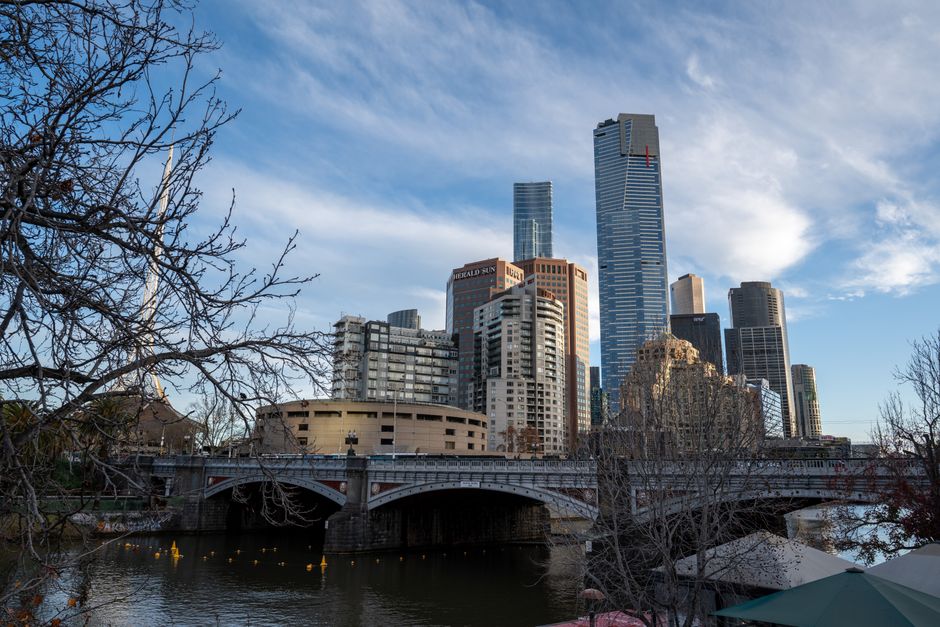
In the rapidly evolving skyline of Melbourne, the complexity of modern construction projects has reached unprecedented heights. While architectural ambition pushes boundaries, the reality of high-density development often brings with it significant risks. For developers, body corporates, and property owners, the emergence of structural anomalies or chronic defects can be catastrophic, both financially and legally.
When standard inspections fail to provide answers, the industry turns to a more rigorous discipline: forensic building investigation in Melbourne. Unlike routine assessments, forensic investigation is a deep-dive diagnostic process designed to uncover the root cause of failures, attribute liability, and provide the technical foundation for rectification and litigation.
A forensic building investigation is a multi-disciplinary approach to diagnosing failures within the built environment. While a standard building inspection is typically visual and non-invasive—often used for pre-purchase assessments—a forensic investigation is an exhaustive, evidence-based inquiry. It treats a building as a complex system of interacting components, where a failure in one area (such as a waterproofing membrane) may manifest as a structural issue elsewhere.
The primary objective is not merely to identify that a defect exists, but to determine why it occurred. This involves "root cause analysis," a process that looks back through the lifecycle of the project—from design and material selection to onsite execution and environmental stressors.
In the context of complex or distressed projects, forensic investigations are rarely proactive; they are usually triggered by critical "red flags" that indicate systemic failure. For high-value assets in Victoria, the following scenarios necessitate a professional structural issues investigation in Melbourne:
If a building suffers from persistent leaks, cracks that reappear after patching, or mechanical systems that fail prematurely, a forensic approach is required. Standard "patch and paint" repairs often mask the underlying issue, leading to exponential increases in rectification costs over time.
Structural integrity is the bedrock of any development. Signs of distress—such as differential settlement, significant masonry cracking (beyond 5mm), or deflection in concrete slabs—require immediate forensic scrutiny. In Melbourne’s varying soil profiles, particularly the reactive basaltic clays in the western and northern suburbs, forensic engineers must assess whether footing systems were appropriately designed and executed according to AS 2870.
Water is the most common cause of building litigation in Victoria. Forensic investigations target the building envelope, including roof membranes, cladding systems, and basement tanking. In high-rise developments, "leaky building syndrome" can often be traced back to poor junction detailing or non-compliant materials.
When a developer or owner enters a dispute with a builder or subcontractor, forensic evidence is the primary currency. Whether it is a claim for liquidated damages or a breach of statutory warranties under the Domestic Building Contracts Act 1995, an expert witness building defects Victoria report is essential for establishing a chain of causation that holds up in the Victorian Civil and Administrative Tribunal (VCAT).
The precision of a forensic investigation relies on the integration of advanced diagnostic technologies. These methods allow investigators to see behind walls, beneath slabs, and inside materials without necessarily compromising the building's integrity initially.
NDT allows for the assessment of building components without causing damage.
When NDT suggests an anomaly, destructive testing is used to confirm the findings. This might involve:
Forensic investigators often send samples to NATA-accredited laboratories. This is critical for identifying materials that do not meet Australian Standards, such as non-compliant combustible cladding or sub-standard steel alloys that may be prone to premature corrosion.
A comprehensive construction project health check utilizes a specific suite of techniques tailored to the building's typology:
The output of a forensic investigation is a technical document that serves as both a roadmap for repair and a legal instrument. For property owners and developers, understanding the structure of this report is vital.
In a distressed project, the path to recovery is often obscured by finger-pointing and "patchwork" solutions. Forensic building investigation provides the clarity needed to move forward.
In Victoria, building disputes are frequently heard at VCAT. The tribunal relies heavily on independent experts. A robust forensic report, authored by a recognized expert witness building defects Victoria, provides the evidentiary weight required to secure a favorable judgment. It transforms a "he-said, she-said" argument into a technical certainty.
Modern projects involve a web of consultants. Is a leak the fault of the architect’s detail, the waterproofer’s application, or the builder’s supervision? Forensic investigation parses these complexities, ensuring that the cost of rectification is borne by the party truly responsible.
The most expensive way to fix a building is to fix it twice. By identifying the root cause, a forensic report ensures that the rectification strategy is permanent. For example, if a basement is leaking due to hydrostatic pressure, simply painting on a waterproof membrane internally will fail. A forensic report might reveal that the sub-soil drainage system is blocked, requiring a mechanical solution rather than a cosmetic one.
Forensic investigations in Melbourne must be conducted within the framework of Australian regulatory standards. A "health check" for a construction project ensures compliance with:
Failure to adhere to these standards during the original construction phase is the most common finding in forensic reports. Consequently, the investigator must possess a deep, current knowledge of how these standards have evolved over time.
For developers and property owners in Melbourne, the cost of a forensic building investigation is an investment in risk mitigation. In the face of structural uncertainty or complex defects, guessing is not a strategy. Forensic building investigations provide the technical precision required to de-risk assets, hold negligent parties accountable, and ensure the long-term viability of the project.
Whether you are currently embroiled in a legal dispute or managing a project that shows signs of distress, a forensic approach is the only way to move from uncertainty to a clear, actionable resolution.
Is your project showing signs of structural distress or chronic defects? Do not rely on surface-level assessments. Our team provides the highest level of forensic building investigation in Melbourne, delivering the technical clarity and expert witness testimony you need to resolve complex building issues.
Contact us today for an advanced project assessment and construction project health check. Our diagnostic excellence is your path to project recovery and structural certainty.

